Welcome: Henan Sinowin Chemical Industry Co.,Ltd.
Language:
 ∷
∷

∷
 ∷
∷
High-purity sulfamic acid: Why are more and more factories replacing hydrochloric acid, nitric acid, or oxalic acid with it?
In industrial cleaning and metal surface treatment, hydrochloric acid and nitric acid have long held a dominant position. They are cheap, react quickly, and have strong descaling capabilities, which sounds ideal. However, equipment supervisors and workshop workers who have actually used them know that the problems these two types of strong acids sometimes bring more than the problems they solve—the acid fumes are choking, equipment corrodes rapidly, waste liquid treatment costs are high, and safety accidents can occur if not handled carefully.
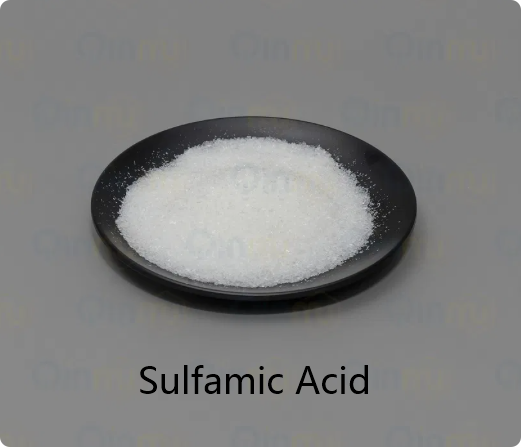
In recent years, more and more factories have begun to turn their attention to sulfamic acid. It is not a new substance, but the comprehensive advantages that high-purity, low-impurity industrial-grade sulfamic acid has shown in the cleaning field have led many customers to change their habits.
1. Product Overview and Main Indicators
Sulfamic acid is a strong solid acid. Although its aqueous solution is extremely acidic, its solid form is very stable, almost non-hygroscopic, and easy to transport and store. Compared with commonly used liquid acids (such as hydrochloric acid and nitric acid), it is less corrosive to metal materials while still maintaining excellent descaling capabilities and chemical activity.
Our newly launched high-purity aminosulfonic acid meets the stringent purity requirements of high-end industrial fields such as boiler cleaning, metal surface treatment, synthetic desulfurizers, and flue gas denitrification. Key specifications are as follows:
Main component content: 99.52%
Iron ions (Fe): 0.83 ppm (far below the standard of 50 ppm, especially beneficial for stainless steel equipment)
Water-insoluble matter: 0.009% (avoids clogging nozzles or membrane pores)
Furthermore, aminosulfonic acid is less volatile than hydrochloric acid, produces no pungent acid fumes, is metal-friendly, and compared to oxalic acid and citric acid, the calcium aminosulfonate produced in the reaction has higher solubility, flushing away easily with water without leaving precipitates to clog pipes.
2.Comprehensive comparison of five acids
Hydrochloric acid | Nitric acid | Citric acid | Sulfamic Acid | |
Corrosive | Strong, easily causes hydrogen embrittlement | It is very strong and can even damage stainless steel. | Very weak, relatively safe for most metals | Milder, suitable for stainless steel |
Operational safety | It produces irritating acid fumes, requiring ventilation and protective measures. | It produces yellow smoke (nitrogen oxides), which has a high risk factor. | Solid powder, highly safe, food-grade. | Solid form, no acid mist, and no significant volatilization after dissolution. |
Descaling range | It works well for carbonate scale, but generally not for sulfate scale. | Effective against some oxides, but prone to surface passivation. | Effective against carbonate scale, but less effective at removing rust than oxalic acid. | Effective against carbonates, sulfates, rust, and silicates. |
Waste liquid treatment difficulty | It contains chloride ions and cannot be directly discharged; it needs to be neutralized and dechlorinated. | Contains nitrates, high processing cost | It is easily biodegradable, the wastewater is relatively dirty, but it is generally easy to treat. | It can be neutralized and discharged directly, and has good biodegradability. |
Comprehensive cost | The acid value is low, but equipment replacement is frequent and waste liquid treatment is expensive. | High acid value, large investment required for tail gas absorption. | The raw material price is slightly high, and its descaling ability is limited, making it suitable for light maintenance. | The unit price of raw materials is slightly higher, but the overall cost of use is lower. |
As shown in the table, aminosulfonic acid achieves a good balance between "mildness" and "high efficiency"—its corrosivity is controllable, its descaling spectrum is broad, its wastewater treatment is relatively simple, and its overall cost is more advantageous.
3. Applicable Scenarios
Based on the characteristics mentioned above, high-purity aminosulfonic acid is particularly suitable for certain specific scenarios:
Regular descaling of stainless steel heat exchangers and condensers (these devices are relatively sensitive to chloride ions)
Process equipment sensitive to chloride ions or calcium oxalate precipitation
Enclosed workshops where acid mist pollution needs to be avoided
Chemical production processes requiring high purity, such as flue gas denitrification and the synthesis of sweeteners.
Contact: Sophia
whatsapp:
 Sophia
Phone: +86 13283888407
Tel: 086-0371-63360817
Email: info@sinochemi.com
Add: NO.28,Sanquan Road, Zhengzhou, China

 chinasinochemical