欢迎光临~河南赛威化工科技有限公司
语言选择:
 ∷
∷

∷
 ∷
∷
The Chemistry Behind Beverage Bottle Bases
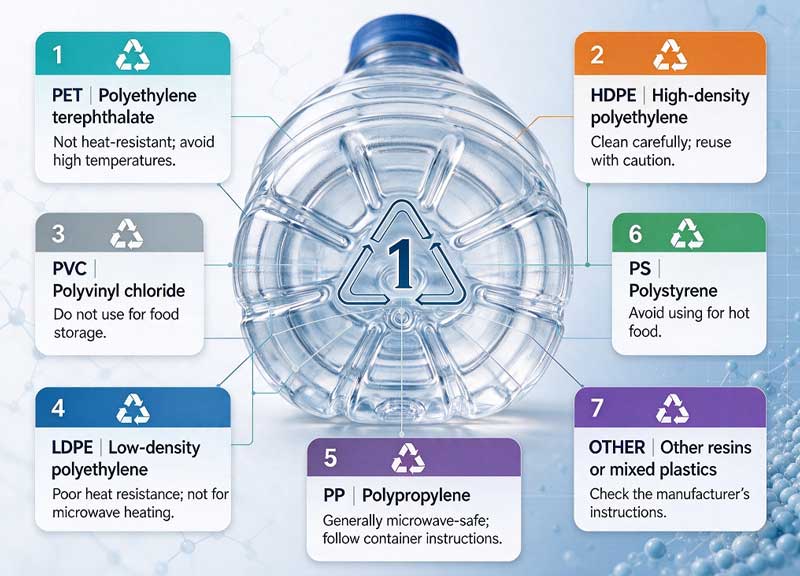
We frequently consume beverages, but have you ever taken a look at the bottle bottom? You might notice a number in one triangular recycling. Do you know what means of these?
First, the "triangle" is a plastic recycling symbol.
Second, the numbers 1-7 inside the triangle indicate the specific type of plastic material used to manufacture these bottles.
Let’s break down what’s the meaning of each number:
1. PET (Polyethylene terephthalate): Not heat-resistant; it may release toxic substances when exposed to temperatures above 60°C.
2. HDPE (High-density polyethylene): Not recommended for reuse, as it is prone to harboring bacteria.
3. PVC (Polyvinyl chloride): Should not be used to store food.
4. LDPE (Low-density polyethylene): Has poor heat resistance. It is the primary component of plastic cling wrap; therefore, cling wrap should not be used to cover food when heating it in a microwave.
5. PP (Polypropylene): The only type of plastic suitable for microwave use, though it is still best to avoid doing so.
6. PS (Polystyrene): Commonly used for fast-food containers; avoid using these to pack piping-hot food.
7. OTHER: Includes all other resins or mixed plastic materials not covered by the previous categories.
 Sophia
 chinasinochemical